FEEDING THE SPIRITS OF THE GROUND
Mayra Carvalho, Laryssa Machada, Kuenan Mayu, Sheyla Ayo, corcione
Group show
Curatorship Lucas Dilacerda / Curatorial assistance Wes Viana
Spell for a Fertile Future
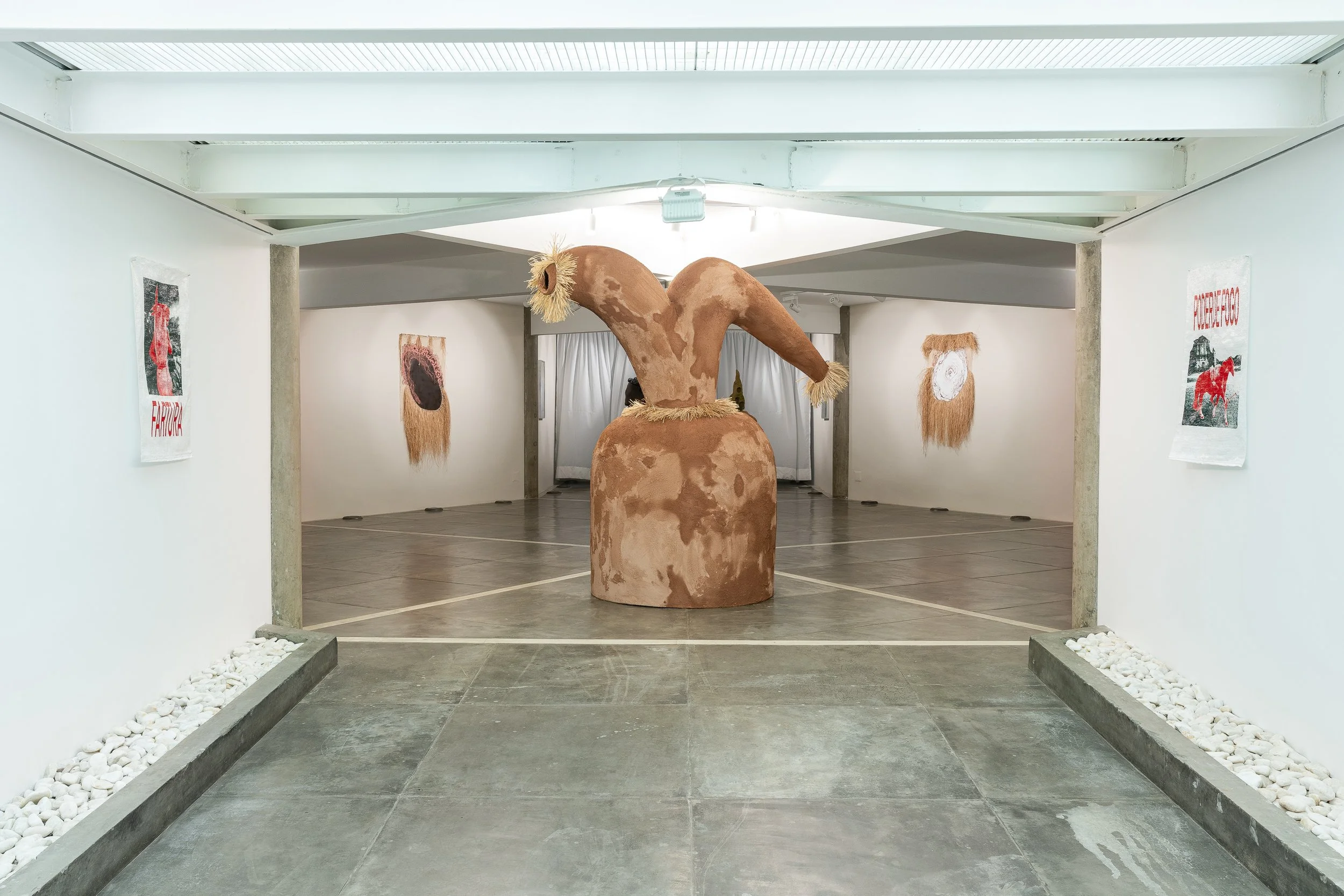
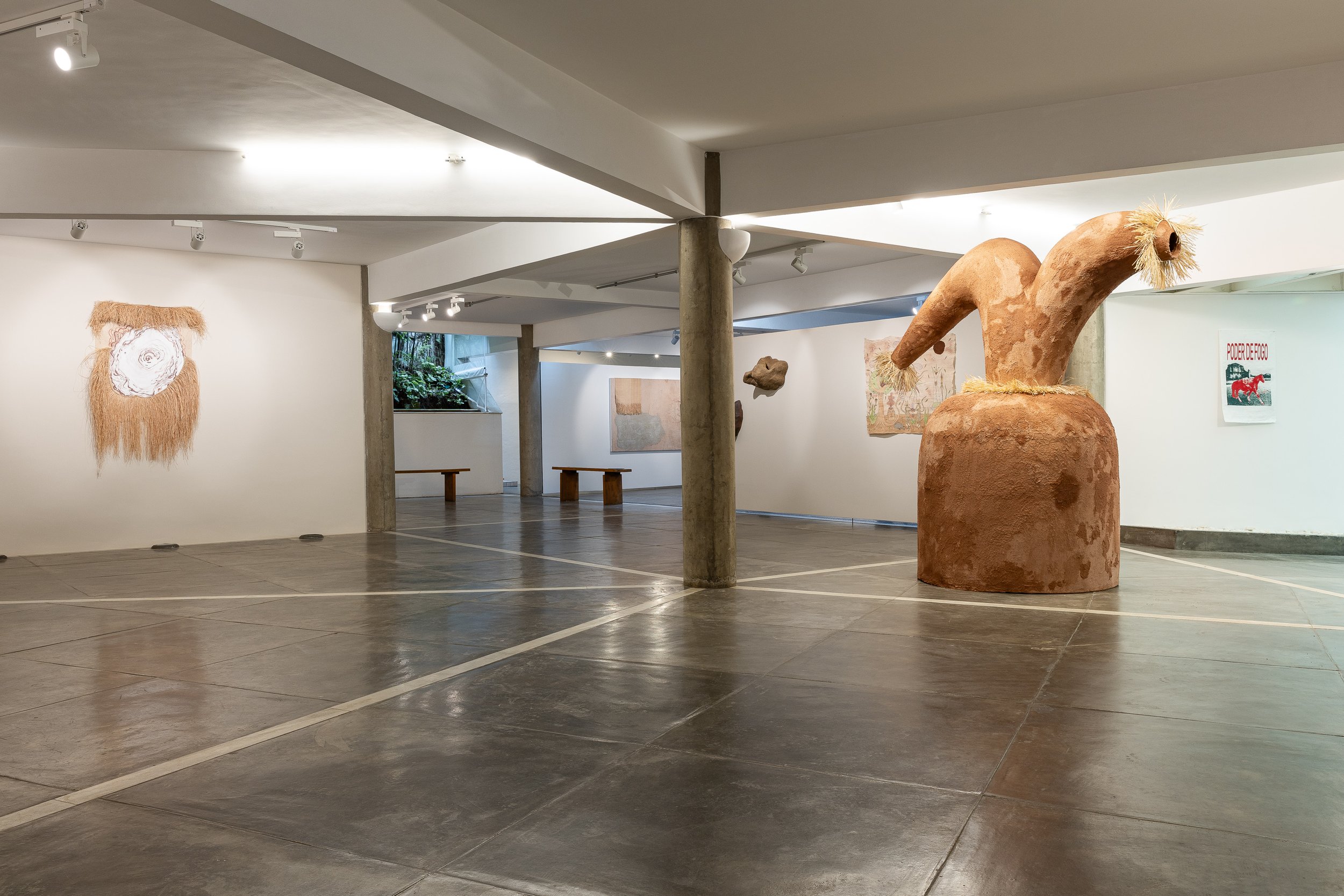
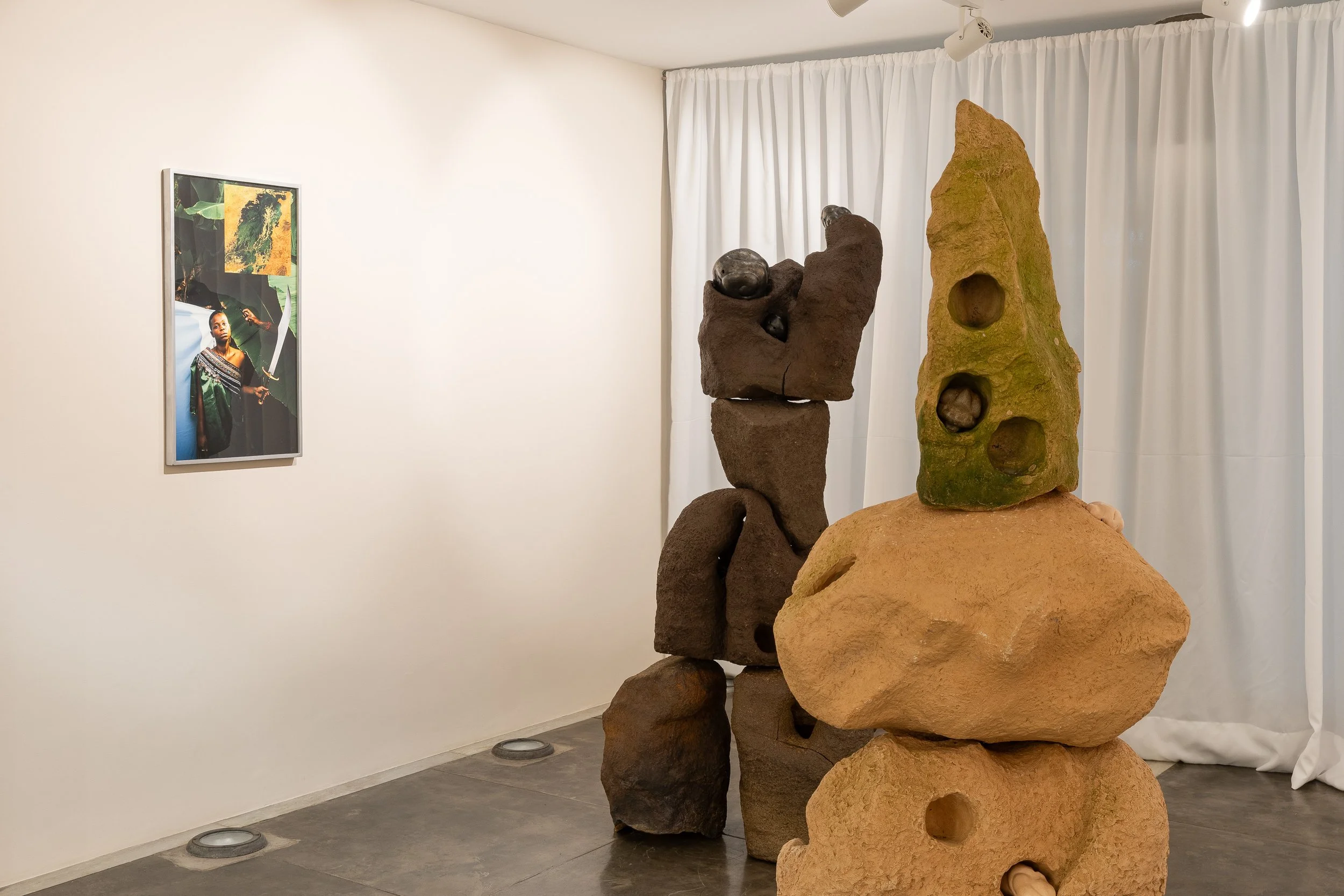
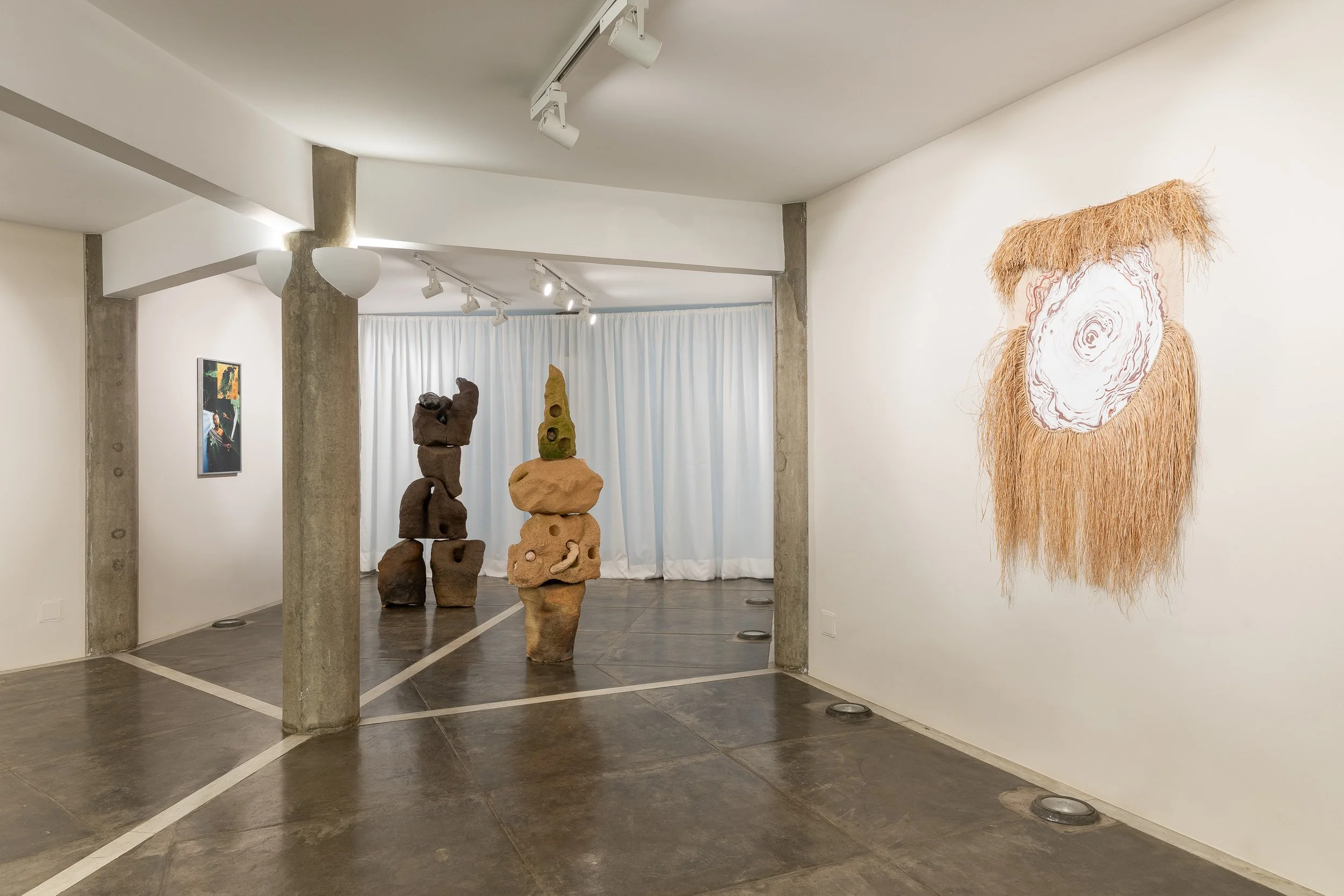
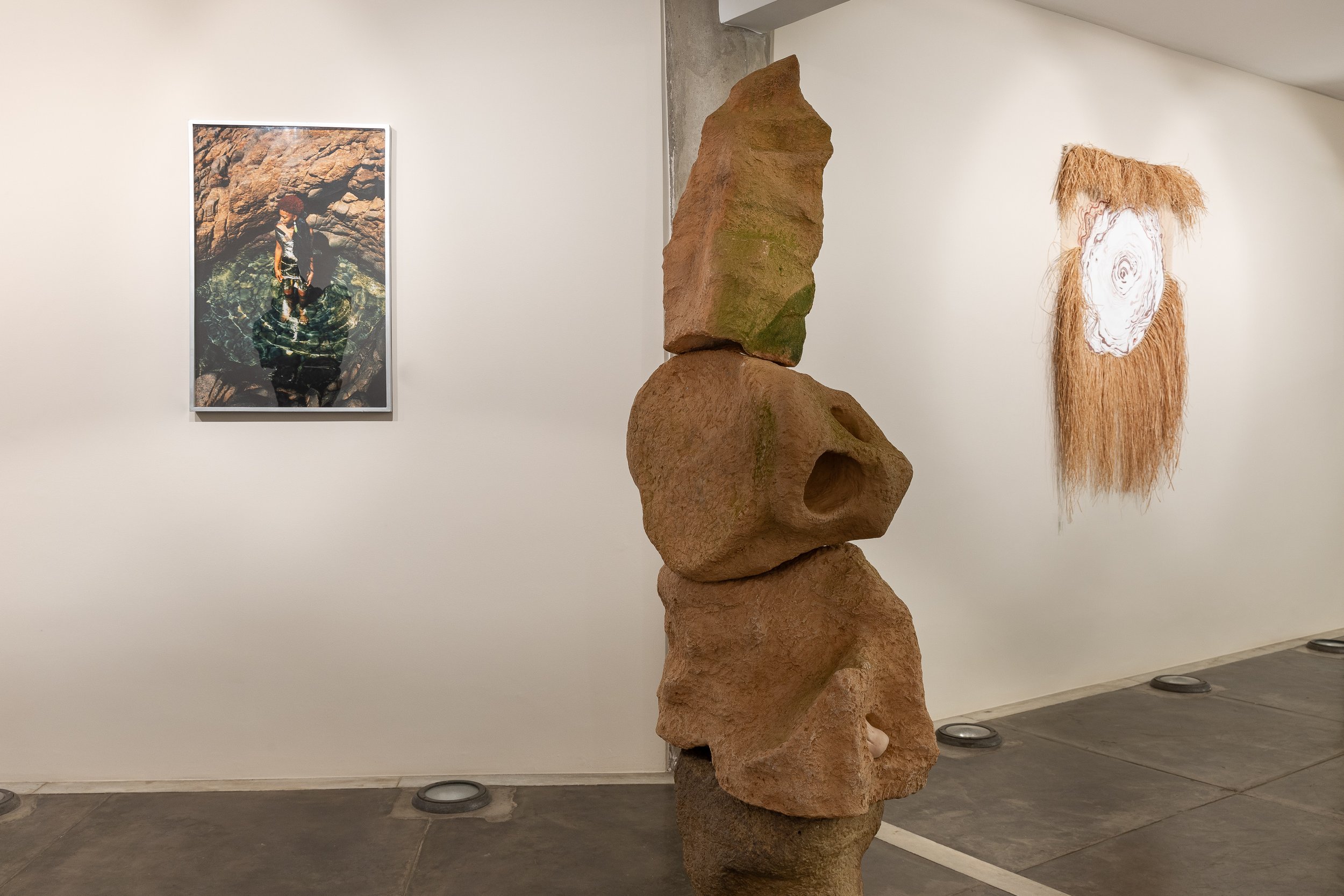
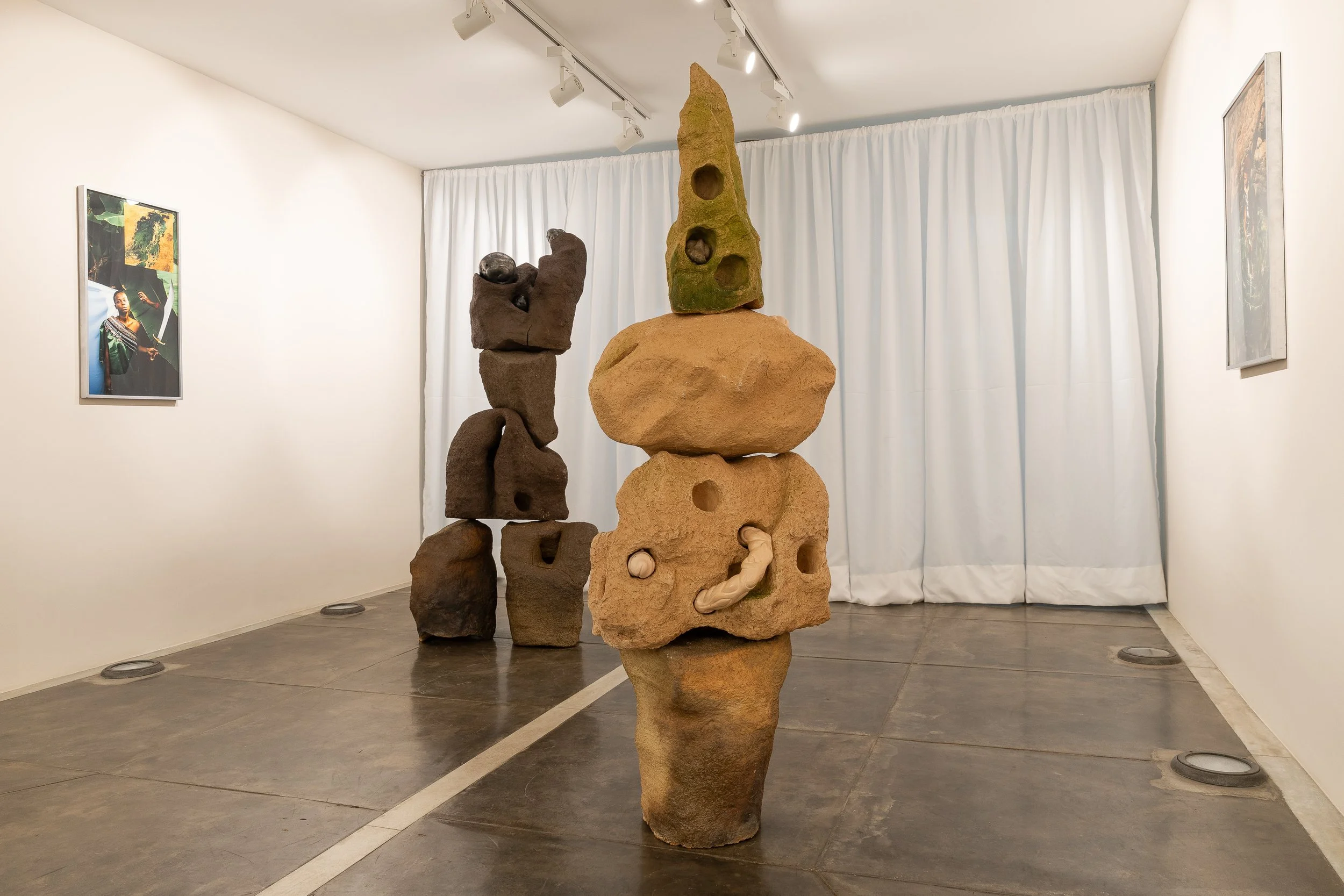
Each work in this exhibition is a nourishment. They were not made for human contemplation; they were made to feed the spirits of the ground. Therefore, this exhibition is a banquet, an offering to immortal souls. The spirits are around us; they are the invisible forces that govern Nature: the force of earth, fire, water, and air. They are the forces of transmutation, fertility, and vitality.
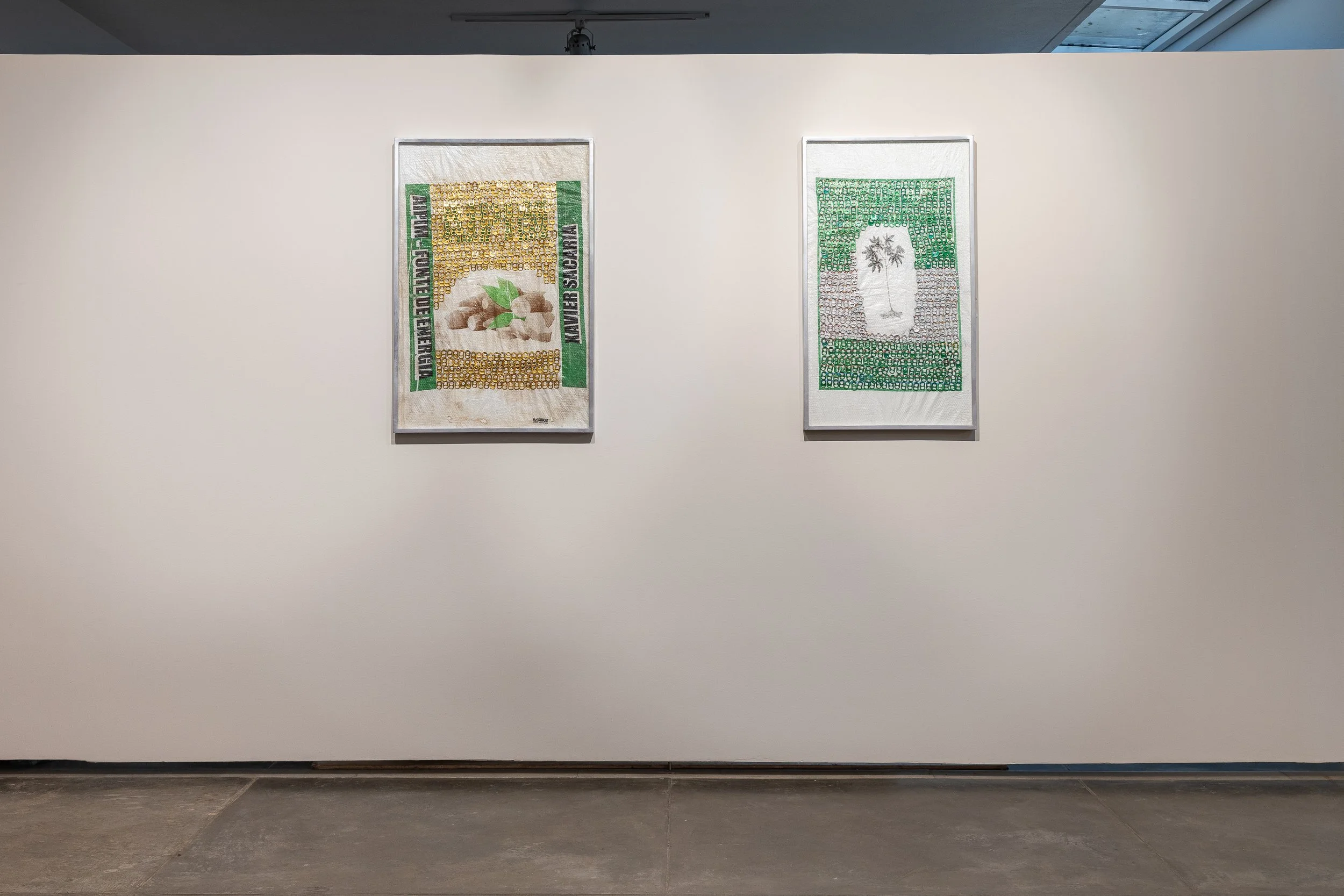
In a time marked by the colonization of nature, the extractivism of natural resources, climate change, and ecological crises, this exhibition takes shape as a spell that nourishes and feeds the protective spirits of Nature. To this end, the exhibition “Feeding the Spirits of the Ground” brings together five artists from different poetics, territories, and cosmologies, who make of their work a nourishment for the guardian entities of life.
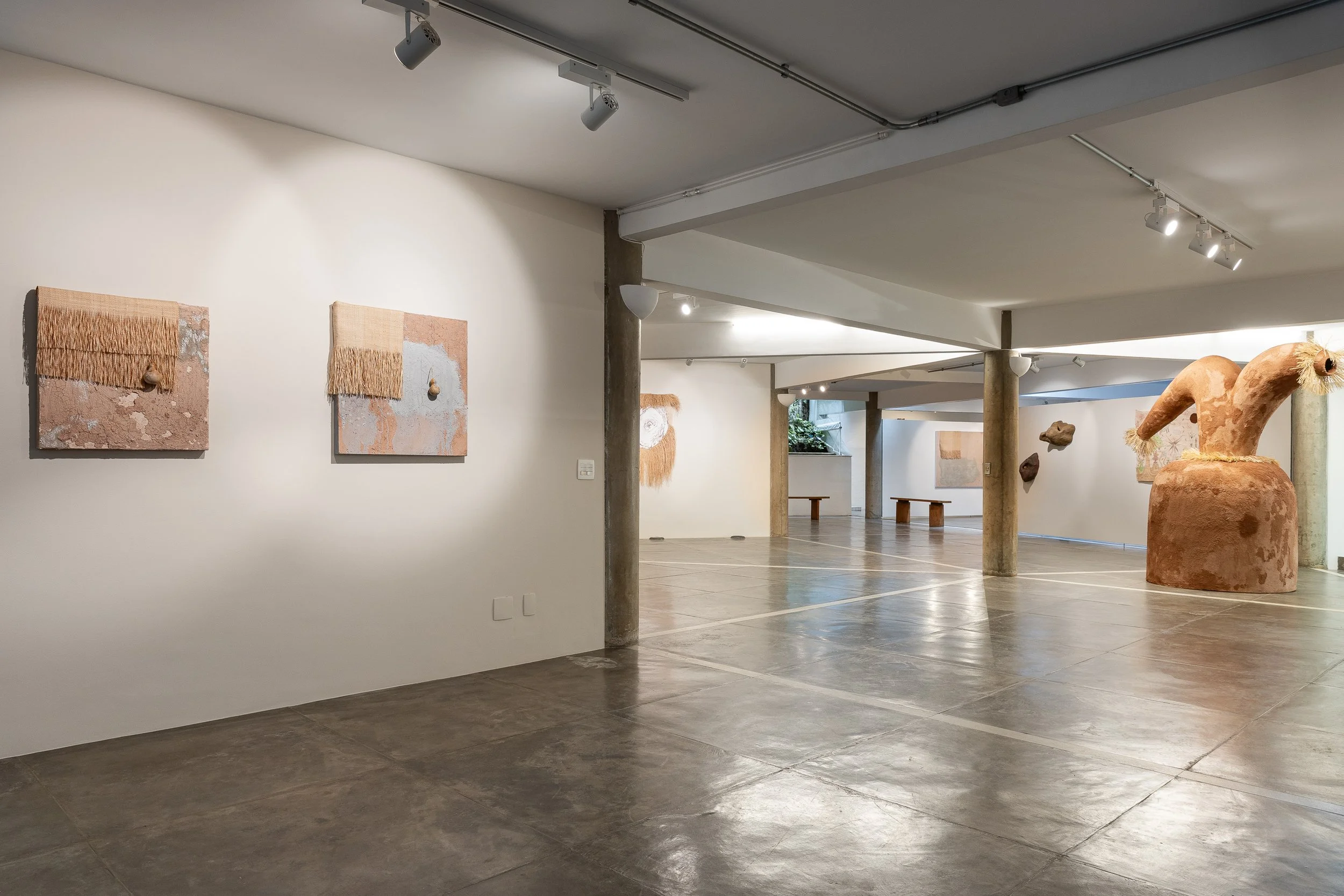
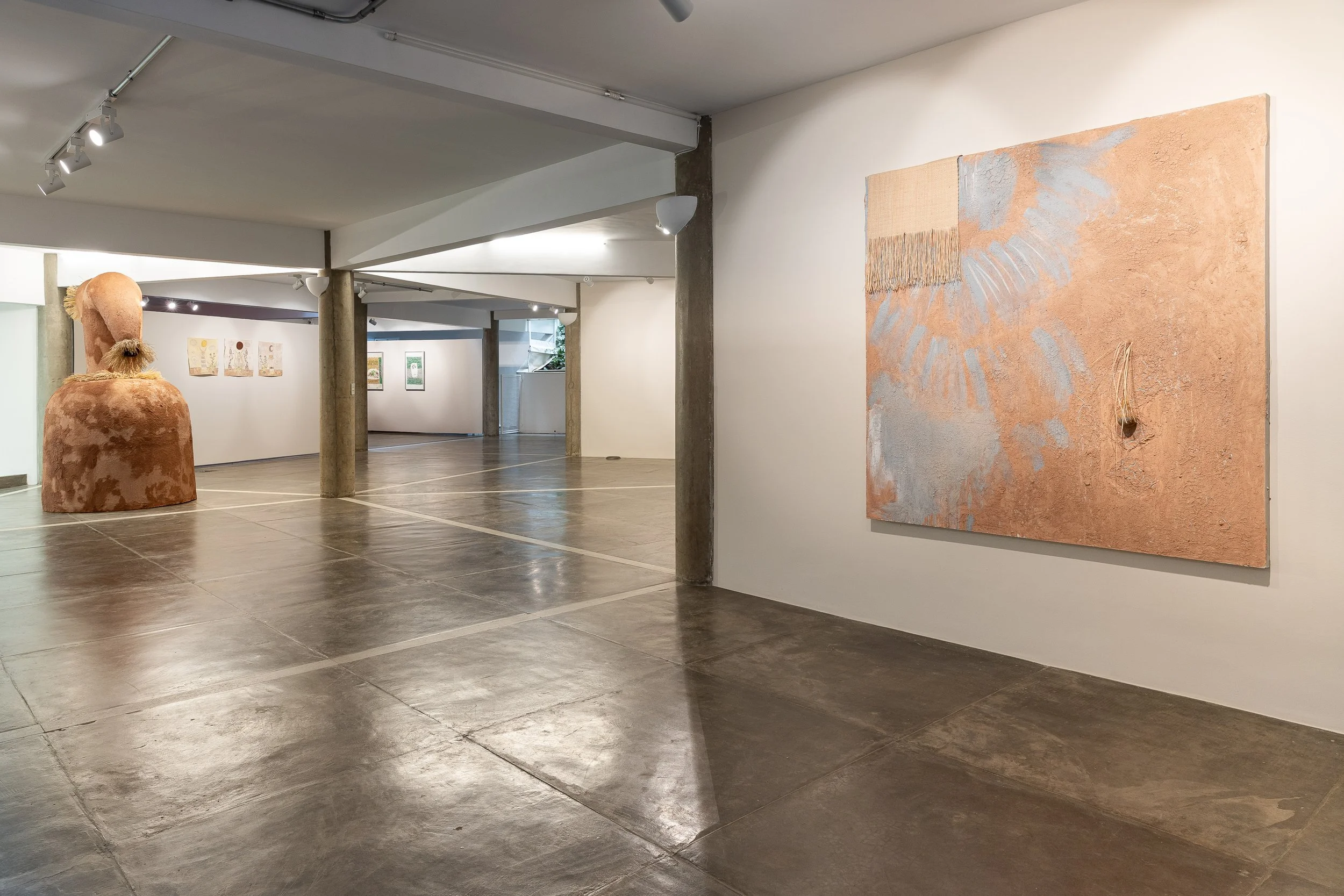
Mayra Carvalho, of maternal Iny Karajá ancestry, grew up on the outskirts of Rio de Janeiro, in the Baixada Fluminense. Her paternal family was made up of bricklayers, metalworkers, and master builders. From an early age, she grew up watching houses being built. Earth, water, clay, brick, iron, and mortar are materials with which Mayra developed an intimacy from childhood, later reappearing in her work as spiritual matter. Her works are poetic translations of messages from the flows of Nature; they are portals to other worlds that connect her ancestry and reveal worldviews that cross the physical and the spiritual.
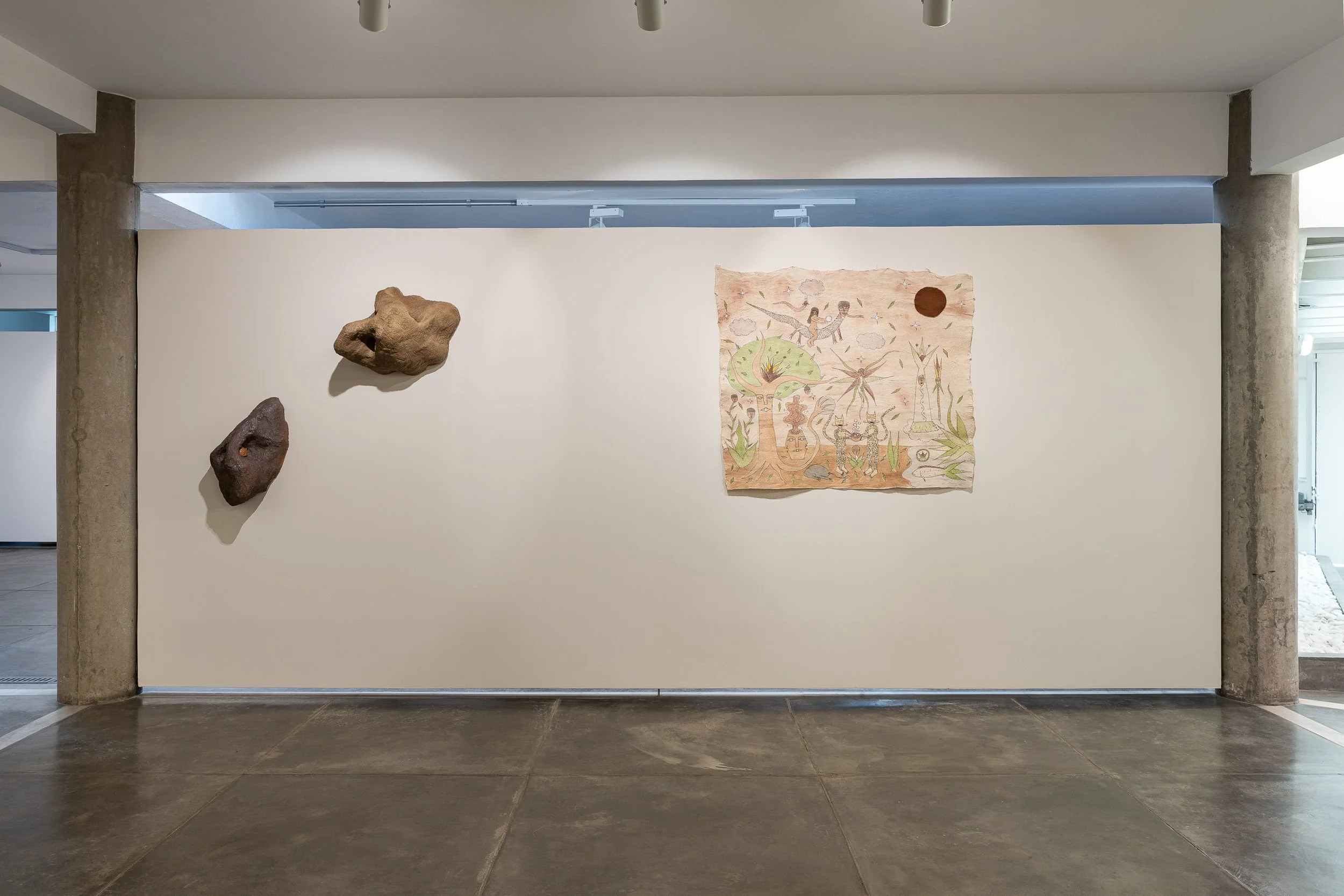
Kuenan Mayu, of maternal Tikuna ethnicity, from the upper Simões River region, grew up alongside Indigenous women who taught her the ancestral technique of tururi—a fabric made from natural fiber transmuted from the inner bark of Amazonian trees, used to create sacred paintings, masks, and garments. Tururi is not only a technique for transmuting matter, but also a technique for transmuting the spirit. The tururi surface is a receptacle for spirits; it is a form of invocation of the forces of Nature. The boa constrictor, for example, is a sign of protection. In the presence of tururi, one is covered by the spirit of protection. By mixing natural pigments of jenipapo and urucum, Kuenan casts, on her tururi surfaces, spells for a possible future for a humanity in crisis.
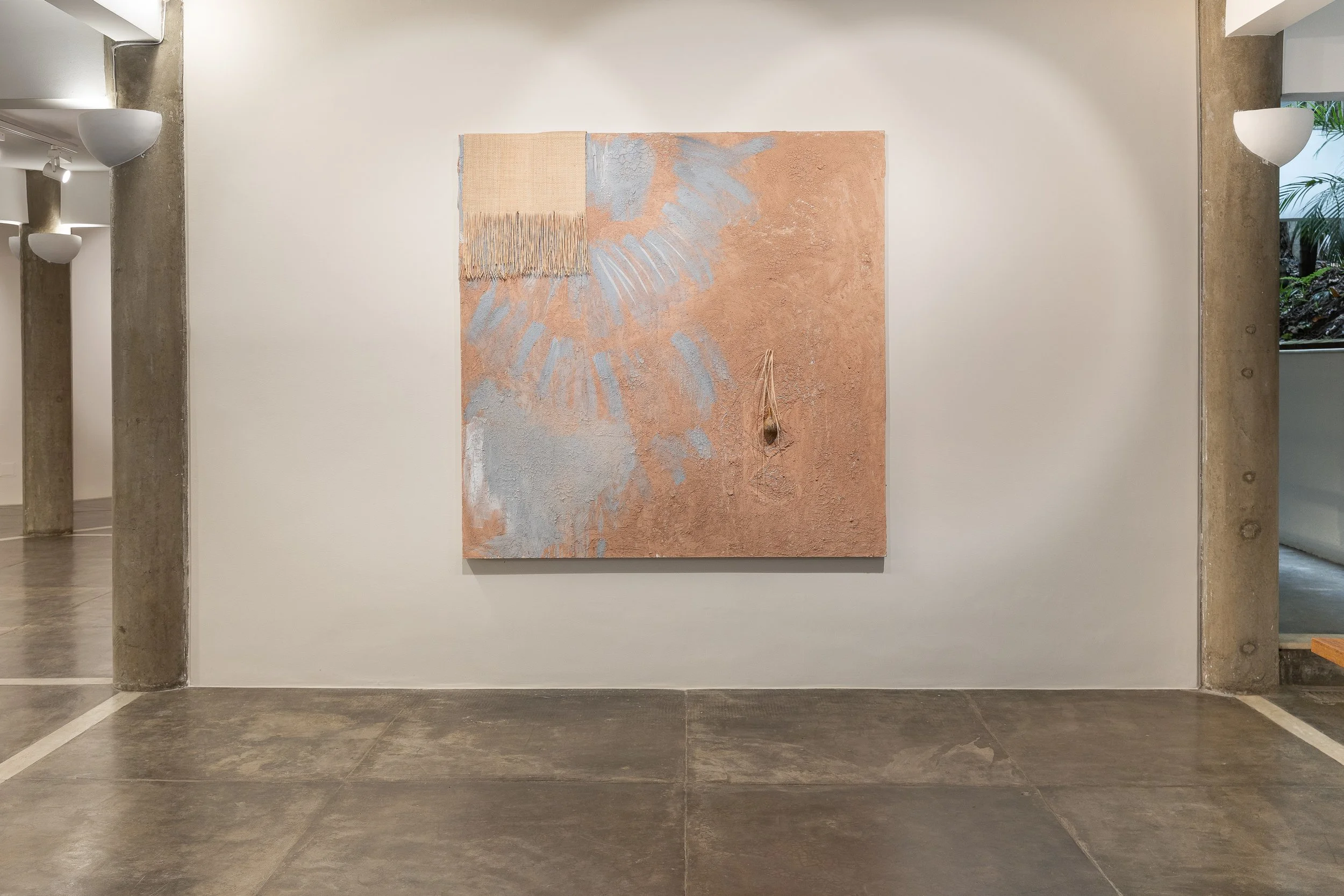
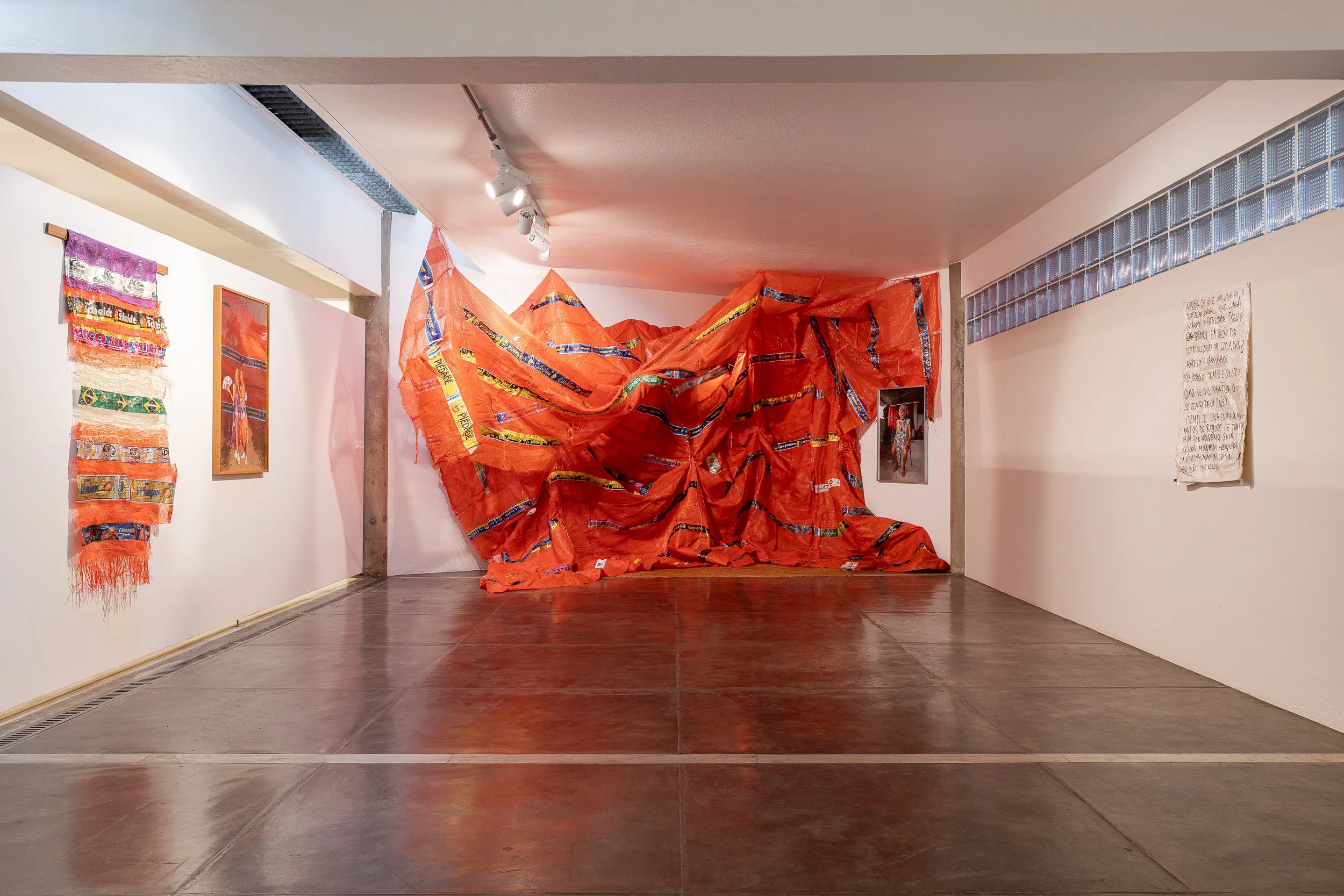
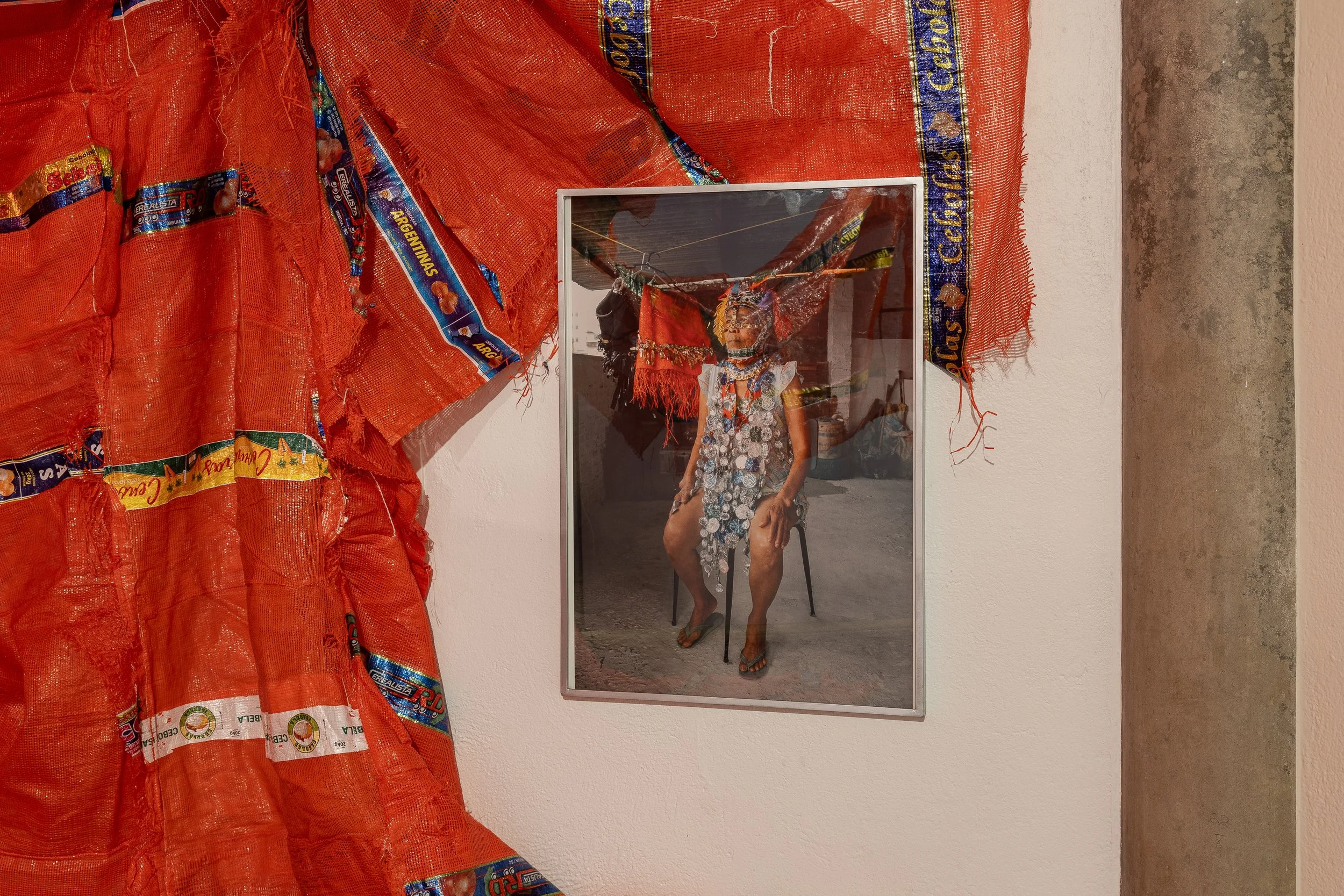
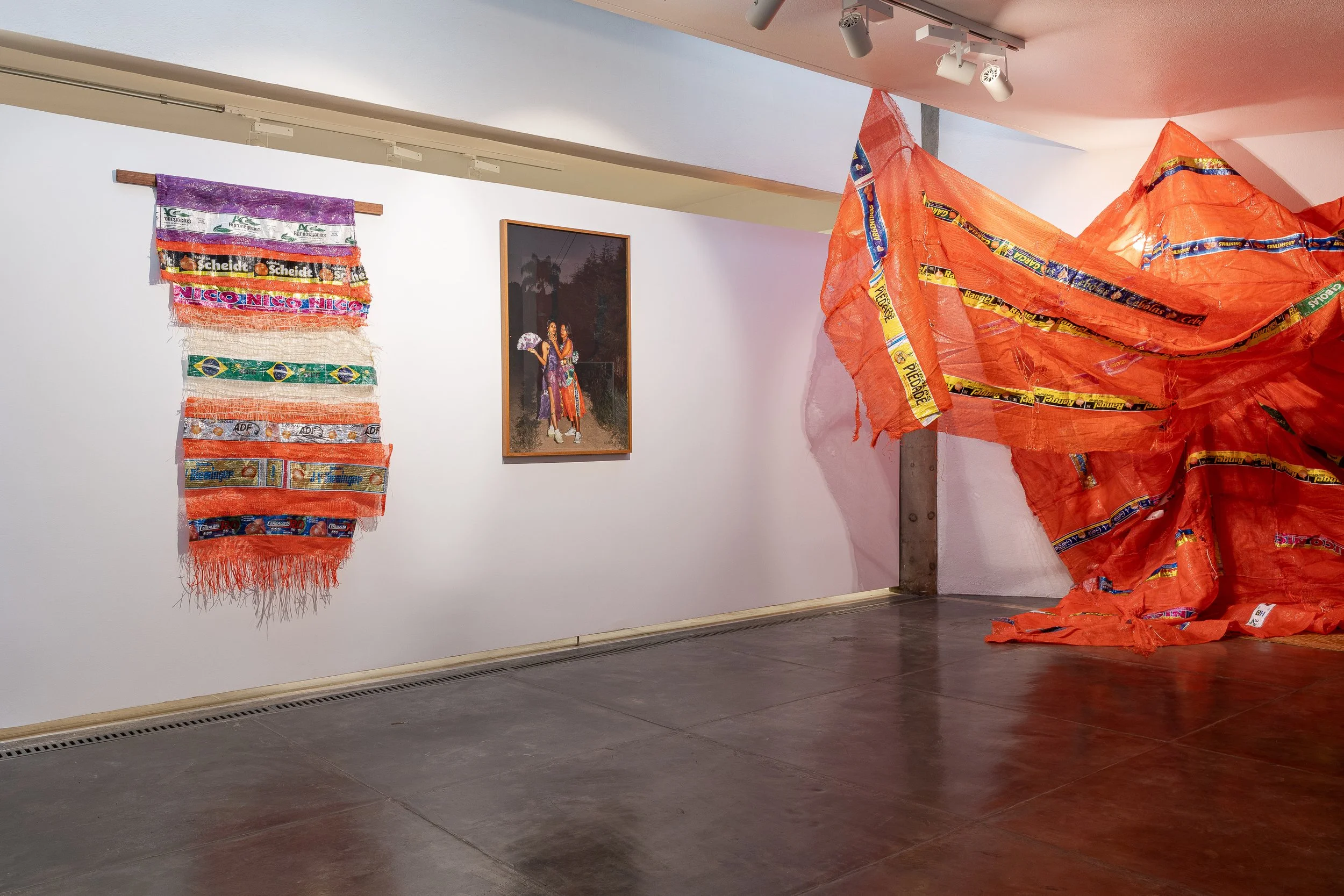
Laryssa Machada constructs images that challenge the “official” narratives about Brazil and tell other stories for racialized bodies and for gender- and sexuality-dissident subjects. The performative character of her images functions as rituals of invocation of entities that inhabited this territory before the Brazilian colonial invasion. In the face of the trauma of colonization, words are insufficient to describe the secrets and mysteries trapped in the unconscious. For this reason, the artist uses photography as a way of freeing spirits that appear in her images as messengers announcing other ways of living. The garments, supports, and installations made from raffia sacks are technologies of invocation that enable the manifestation of sacred and spiritual entities. Furthermore, the deconstructed raffia sacks engage with processes of urban metropolization, in which fertility is forced to travel hundreds of kilometers—through packaging, labor flows, and routes of disposal—to sustain an urban body that has become detached from the ground.
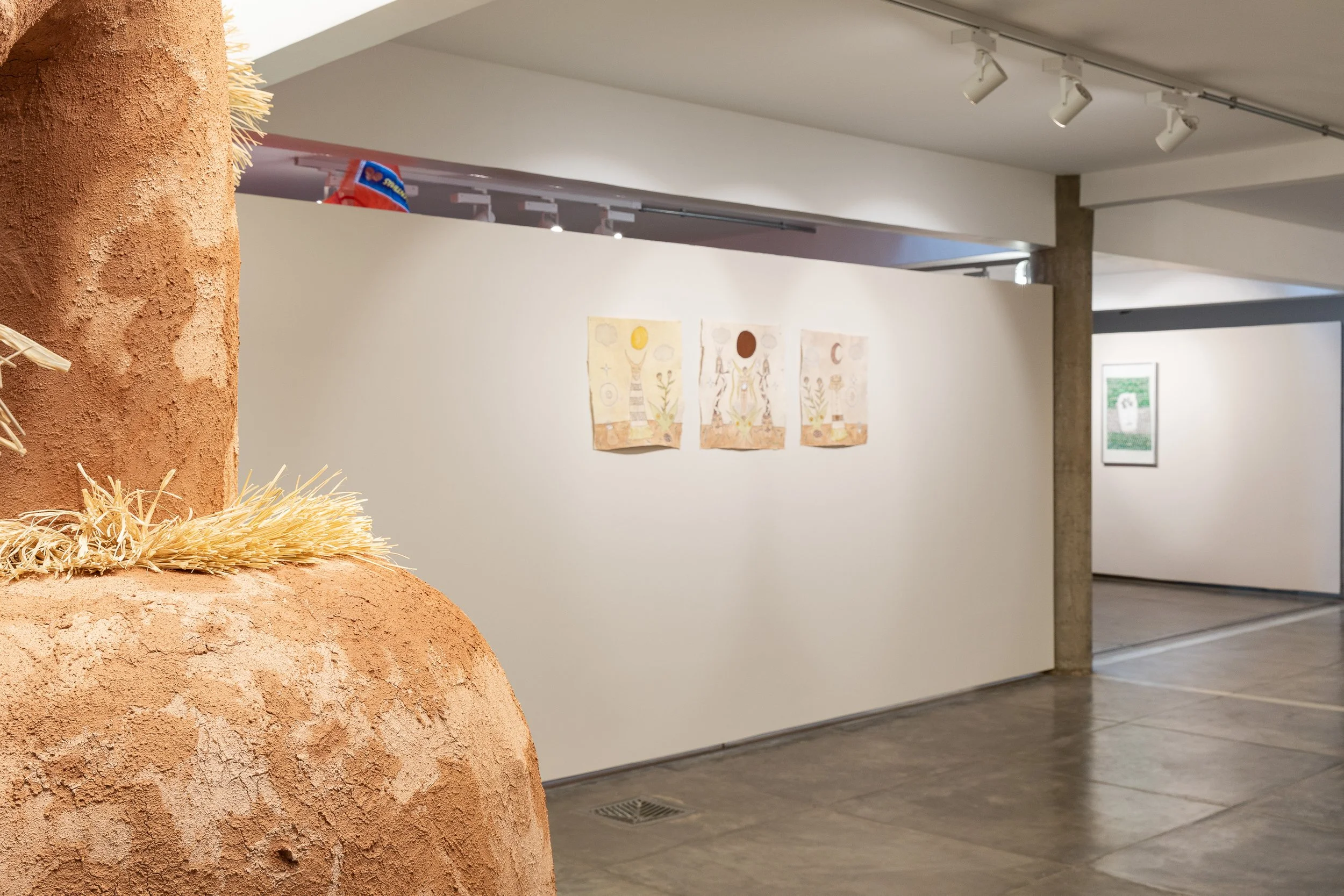
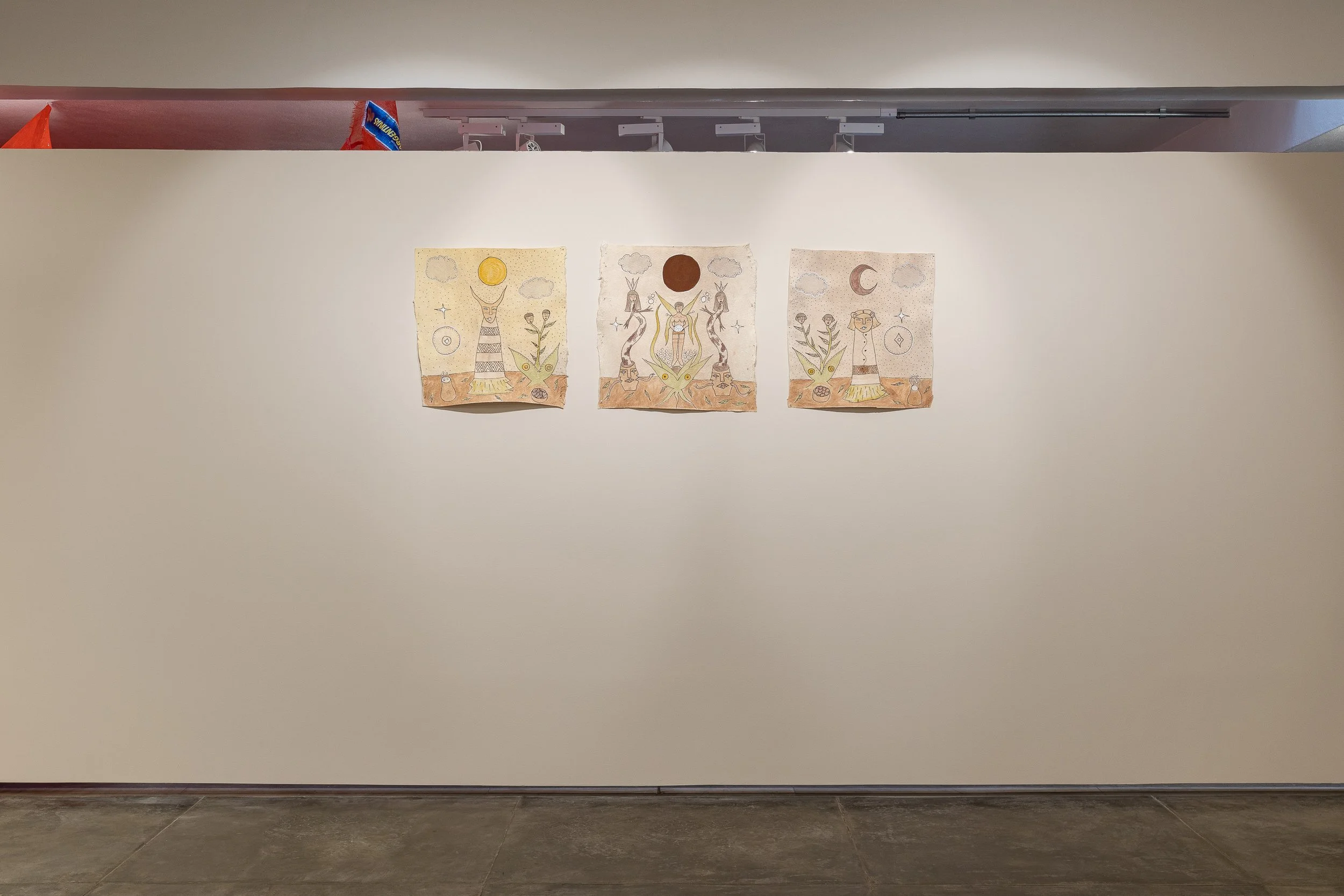
Sheyla Ayo summons buried memories, activates lineages interrupted by the African diaspora, and reinscribes the Black body as a sacred territory of passage between the visible and the invisible. “Ayo” is a Yoruba word that carries joy, fluidity, and vitality; here it operates as a vital force, as a breath that passes through lines, threads, and natural materials to weave an intimate and collective family archaeology. In her works, the line is a structuring element. Her black lines—sometimes continuous, sometimes broken—draw life trajectories, maps, and ancestral routes marked by displacements, withdrawals, and returns, where the abstract and the figurative blend intuitively, as one who listens to the earth before drawing it. Moving between painting, textile, and buriti palm fiber, the artist materializes Yoruba philosophy and casts a spell of balance and gentleness upon the world.
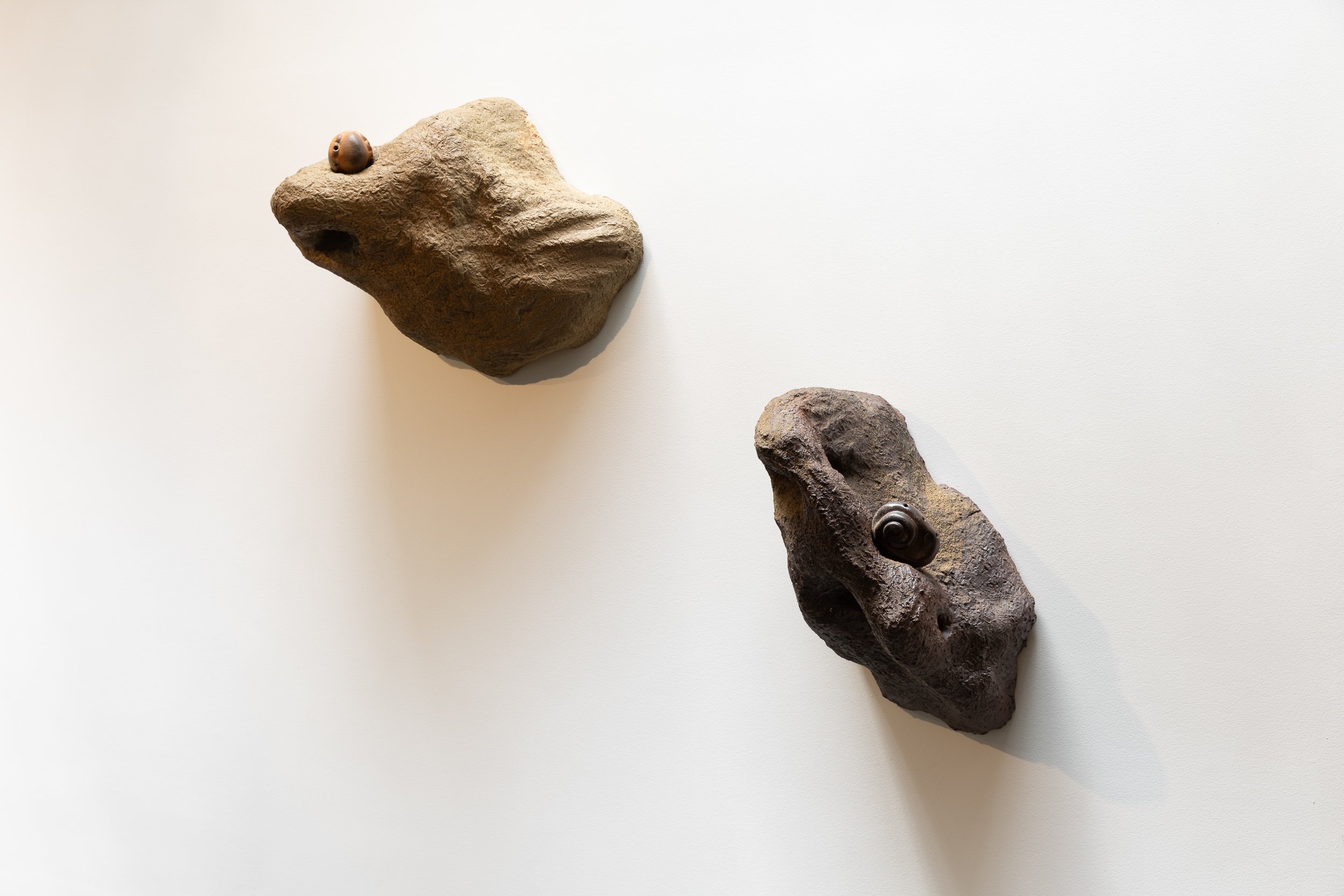
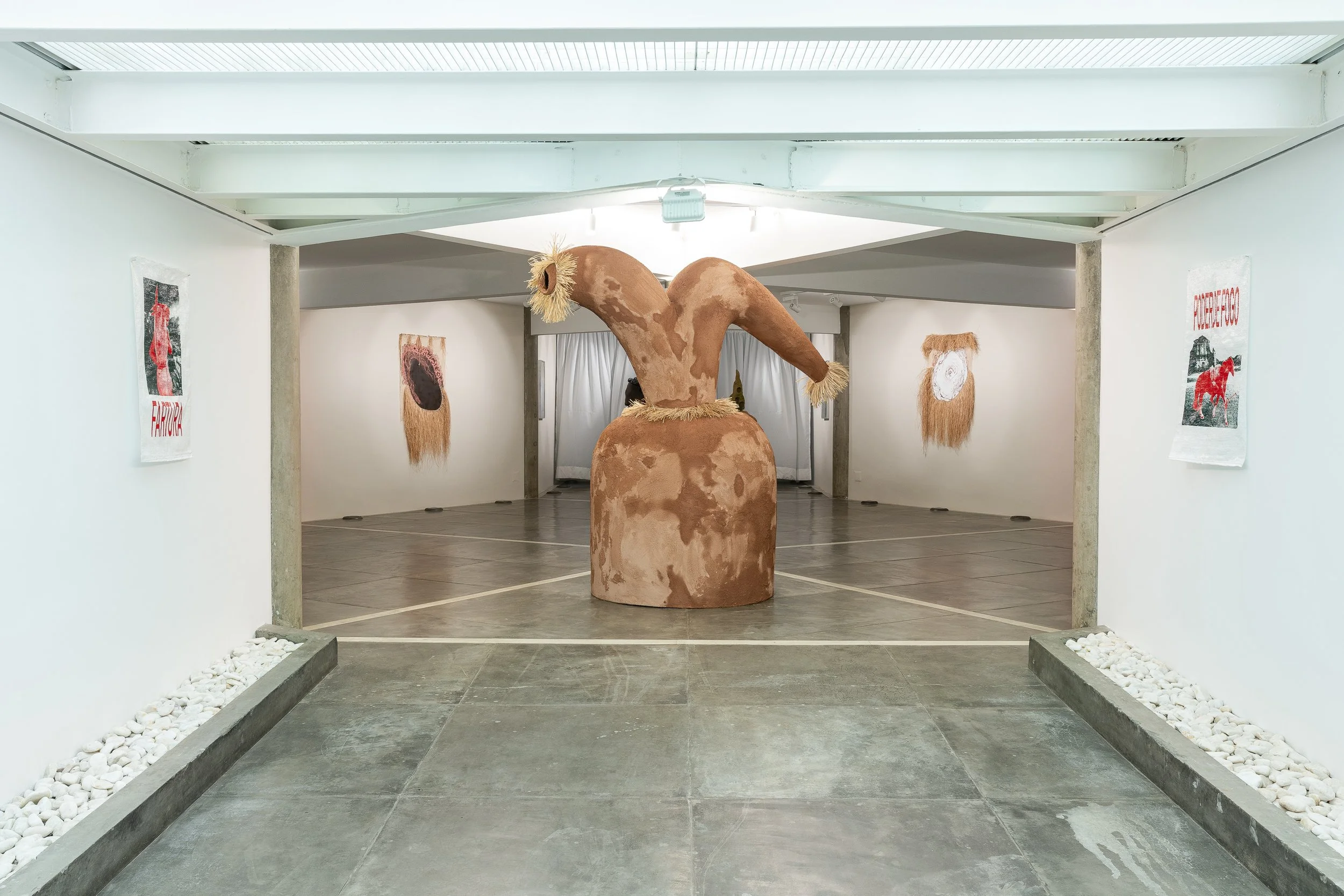
corcione seeks to re-member with primordial matter. In their works, the artist fabulates a post-human fictional geology, articulating the scientific term that speculates on the origin of life on Earth (the hypothesis that meteors brought primordial genetic material) with an imagination of after the collapse: in a post-apocalyptic scenario, we ourselves are already this fossil—embryos leaning against the earth, life and death inseparable. Between vessels and voids, cavities and organs, the work investigates the primal as a state prior to stabilized form, where the body encounters the Earth through contact, breath, and vibration. Sound emerges as a vibrational experience that returns the human to Nature, establishing a tactile intimacy with matter. By refusing excess glaze and preserving the raw surface of clay, corcione affirms ceramics as the flesh of the Earth.
In this exhibition, the works are offered to the invisible metabolism of the world. Each transmuted, fertilized, or decomposed material (by fire, water, air, earth, and time) operates as spiritual nourishment that feeds the invisible energies sustaining life. Between installation-based knowledges, practices of transmutation, spiritual rites, and elemental alliances with matter, the exhibition becomes a seed to fertilize possible futures.
Lucas Dilacerda
Curatorship, AICA - International Association of Art Critics